

.jpg)


At this year’s NewFronts, the message from Mountain View was crystal clear: YouTube isn’t satisfied with serving one or two slices of brands’ creator marketing demands. It wants the whole pie. We’ve been tracking the shift toward human-led, technology-driven efficiencies, and Google’s latest announcements represent a massive leap forward. By embedding the Gemini AI spine directly into the creator ecosystem, Google is effectively turning YouTube into a comprehensive operating system for the creator economy.
Here is what has us excited about the "Gemini Advantage" and the efficiencies we're keeping an eye on.
From Manual Search to "Agentic" Discovery
The biggest friction point in influencer marketing has always been the "sift." Historically, finding the right talent required manual keyword searches or expensive third-party agencies. YouTube is solving this by rebranding BrandConnect into Creator Partnerships and supercharging it with Gemini. Advertisers can now use natural language queries to find hyper-specific niches.
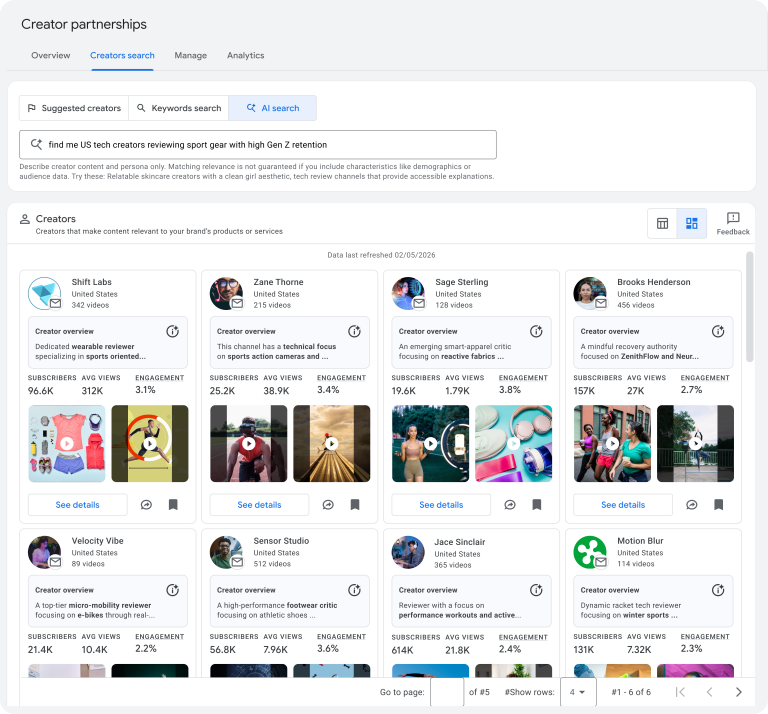
So, how is this creating efficiencies for creators and consumers alike? Instead of scrolling for hours, a marketer can simply ask: “Find me US tech creators reviewing sports gear with high Gen Z retention.” This doesn’t just surface the "usual suspects." Gemini analyzes billions of data points—from brand mentions to subscriber growth—to find "hidden gem" creators who might have been missed by manual audits.
The Unified Workflow (what we’re calling their "whole pie" strategy)
Google is eliminating "tab fatigue" by centralizing everything. Creator Partnerships is now integrated directly with its three most popular marketing platforms: YouTube Studio (for creators), Google Ads, and Display & Video 360 (DV360).
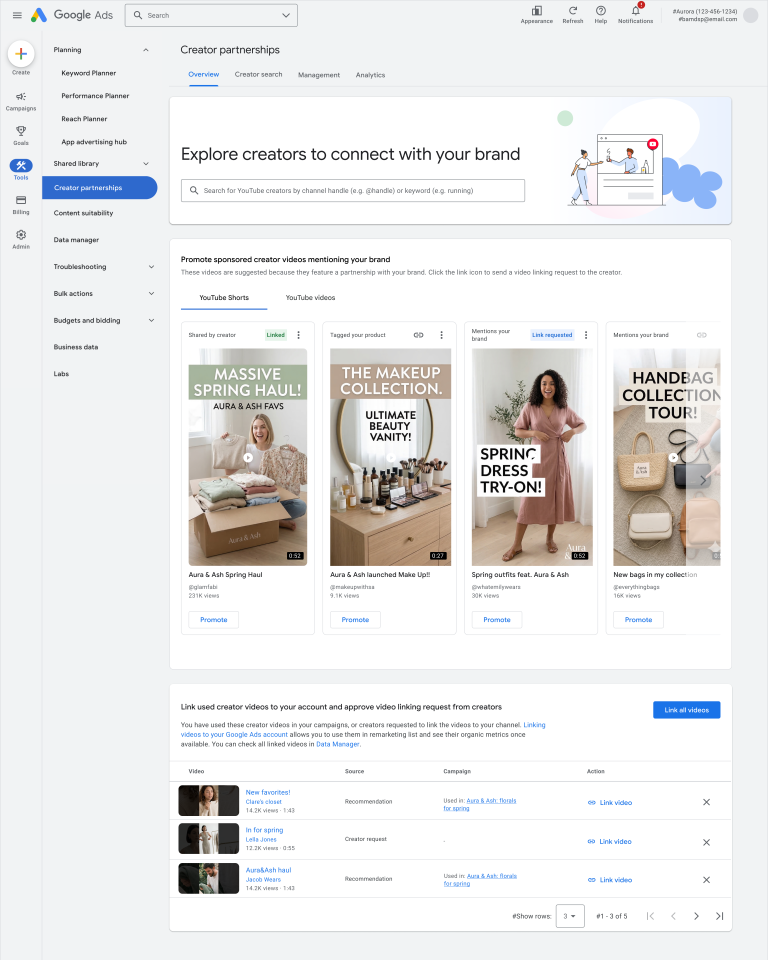
This allows brands to shortlist creators, reach out en masse, and manage deals within a single hub. By the end of 2026, Google plans to let advertisers simply input a campaign brief, and the AI will recommend the entire creator roster needed to hit those specific KPIs.
Solving the Measurement Myth
For years, the industry has struggled with "clean" data when mixing paid ads and organic creator content. Tim Sovay from CreatorIQ said it best himself: “Creator marketing has matured into a core growth channel, but the industry has lacked the depth of measurement needed to scale with confidence." Google’s new unified measurement feature aims to provide a deduplicated look at the material impact of creator investments.
Enterprise-Grade AI: "Ads Advisor" & Confidential Matching
Beyond creators, Google is leaning into agentic assistants within DV360. A new tool called Ads Advisor can now edit, optimize, and report on campaigns, even explaining why a creative asset was rejected and how to fix it. Furthermore, they are tackling the "overfrequency" nightmare. Using confidential publisher match, Google is leveraging Gemini to manage household frequency, ensuring users aren't bombarded with the same ad 20 times—a win for user experience and advertiser ROI alike.
Quick Recap
So, a quick recap: why are we a little giddy about these updates? Well, simple: for months, we’ve been sharing with our partners how AI is affecting consumers and how it will continue to shift brand strategy. Now, Google is making it official for the whole ecosystem. They are officially moving away from AI as a "bolt-on" feature and toward AI as core infrastructure. Google’s distribution advantage is undeniable; by baking Gemini into the tools marketers already use daily, they are setting a new standard for how fast a brand can move from "idea" to "global creator campaign."
Stay tuned as we continue to share updates throughout the week!
.png)
.png)
.png)
.png)
